

self-exclusion tool Key Takeaways
Self-exclusion tools are a powerful way to take control of your gambling habits, but they only work if you use them correctly.
- Mistakes like choosing the wrong program length or skipping multi-operator options can render a self-exclusion tool less effective.
- Setting up self-exclusion properly requires a few concrete steps, including gathering account details and confirming your request.
- You can combine self-exclusion with other strategies, like blocking software and financial restrictions, for stronger protection.
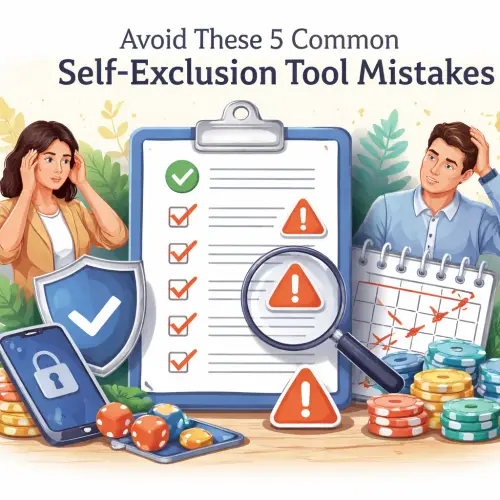
What a Self-Exclusion Tool Actually Does (And Doesn’t Do)
A self-exclusion tool lets you voluntarily ban yourself from gambling operators for a set period—commonly six months, one year, or permanently. Once you enroll, the operator must legally remove you from marketing lists and refuse your deposits. But it doesn’t block all gambling automatically. You still need to exclude from every site you use, and some programs only cover specific products like online casino or sports betting.
Understanding this scope helps you avoid the first big mistake: assuming one exclusion covers everything. Many people sign up with just one casino and later discover they can still play elsewhere. That’s why experts recommend enrolling in national or state-level self-exclusion programs that span multiple operators.
Mistake #1: Picking the Wrong Exclusion Period
One of the most frequent errors is choosing a period that doesn’t fit your situation. If you pick a short duration like six months, you may not break the habit. On the other hand, a permanent exclusion can feel overwhelming, leading some people to never start.
How to Choose the Right Duration
Start with your personal track record. Have you tried to stop before? If so, how long did you stay away? Use that data. A 12-month exclusion is a common sweet spot—long enough to break routines, short enough to feel manageable. Many online self-exclusion programs let you renew or extend before your time ends, so you can adjust later if needed.
Mistake #2: Excluding Only One Platform
Enrolling with a single operator creates a false sense of security. You might feel like you’ve done the work, but the risk remains high if you have accounts elsewhere.
Use State or National Registries
Many jurisdictions offer centralized self-exclusion programs. For example, Gamban and GAMSTOP in the UK cover hundreds of sites at once. In the U.S., states like Pennsylvania, New Jersey, and Michigan each have their own registry. Always check if a multi-operator option exists before you exclude from individual sites.
Mistake #3: Failing to Combine Self-Exclusion with Other Tools
Self-exclusion is a powerful first step, but it’s not a silver bullet. If you don’t address the underlying triggers or remove easy access to money, you may still find ways around it.
What Else Should You Use?
Pair your self-exclusion tool with blocking software like BetBlocker or Gamban. Also ask your bank to block gambling transactions. Some financial institutions let you set spending limits or even freeze credit cards for a period. Together, these layers create a much stronger safety net. For a related guide, see Dormant Account Maintenance Fees: 5 Smart Ways to Avoid Them.
Mistake #4: Not Confirming Your Exclusion Is Active
A surprisingly common mistake: assuming everything worked because you clicked a button. But systems fail, emails get lost, and some operators process requests with a delay.
What to Do Instead
After you submit your request, always verify. Look for a confirmation email or account notification. If you don’t receive one within 24 hours, contact customer support. Some online self-exclusion systems let you log in and check your status. Make it a habit to confirm before you close the browser.
Mistake #5: Ignoring the Reinstatement Rules
When your exclusion ends, you may be tempted to jump back in. But many programs have a cooling-off period before you can gamble again. Others require you to physically visit a casino or call to be reinstated. Not knowing these rules can lead you to inadvertently breach your own plan.
Plan Your Re-entry
If you decide to return after your exclusion ends, wait at least 48 hours after reinstatement. Use that time to ask yourself honestly: Is this a good idea? Many people realize they’d rather extend their exclusion. Remember, you can always re-enroll if you need more time.
How to Self-Exclude: A Step-by-Step Guide
If you’re ready to take action, here is a clear process that works across most operators and national programs.
Step 1: List Every Account You Use
Write down all usernames, emails, and operator names. Include land-based casinos if you visit them. This list is your roadmap.
Step 2: Choose Your Program Type
Decide between a single-site exclusion, a state/national registry, or a commercial blocking tool. For maximum protection, use at least two. For example, enroll in your state’s gambling self-exclusion program and install Gamban on your phone.
Step 3: Submit Your Request
Follow the operator’s instructions. You may need to provide identification, upload a photo, or sign a form. Keep a copy of everything.
Step 4: Confirm Activation
Check your account status within 48 hours. If the exclusion isn’t live, contact support immediately. Do not gamble in the meantime.
Step 5: Set Future Reminders
Mark your calendar a month before the exclusion ends. That way, you can decide whether to extend before the deadline passes.
Benefits and Limitations of Self-Exclusion Tools
Like any protective measure, self-exclusion has clear strengths and some weaknesses. Here is a balanced look.
| Benefit | Limitation |
|---|---|
| Legally enforced ban from participating | Does not block unlicensed or offshore sites |
| Removes you from marketing lists | Does not address underlying triggers or mental health |
| Can be extended or made permanent | Requires proactive enrollment—no automatic option |
| Often free and confidential | Some programs have long processing times |
Best Practices for Using Self-Exclusion Tools
These tips come from years of working with problem gambling support services. Follow them to get the most out of your self-exclusion tool. For a related guide, see 7 Essential Resources for Responsible Gambling in Singapore.
- Exclude from all operators at once. Use a multi-operator registry if one exists in your country or state.
- Pair with financial blocks. Contact your bank to stop gambling transactions entirely.
- Tell a trusted person. Share your exclusion plan with a partner, friend, or counselor. Accountability helps.
- Redistribute your free time. Replace gambling with a hobby like exercise, reading, or cooking. Fill the gap.
- Review your exclusion periodically. If you feel the urge coming back, extend early.
Useful Resources
For more detailed guidance and support, see these trusted organizations:
- National Council on Problem Gambling – Self-Exclusion Programs – Overview of state-by-state options in the U.S.
- GAMSTOP – Free Online Self-Exclusion Service – The UK’s national program for blocking online gambling sites.
Frequently Asked Questions About self-exclusion tool
What is a self-exclusion tool?
A self-exclusion tool is a voluntary program that lets you ban yourself from gambling at specific operators or across a jurisdiction for a set period.
How do self-exclusion programs work?
You submit a request with the operator or a central registry. Once active, the operator refuses your deposits, removes marketing, and may close your account.
Is online self-exclusion free?
Most government-run and operator-based self-exclusion programs are free. Some third-party blocking apps charge a small monthly fee.
Can I self-exclude from all gambling at once?
In jurisdictions with central registries (like GAMSTOP in the UK), yes. Otherwise, you must self-exclude from each operator separately.
How do I know if my exclusion is active?
Look for a confirmation email or check your account status. If you receive no confirmation within 48 hours, contact customer support.
Can I cancel a self-exclusion before it ends?
Most programs do not allow early cancellation. This is intentional to protect you from impulsive decisions.
What happens when my exclusion ends?
You may need to request reinstatement. Some operators require you to wait 24-48 hours before you can gamble again.
Do self-exclusion tools block all types of gambling?
Not always. Some programs cover only online casino, others include sports betting or land-based venues. Read the terms carefully.
Can I still gamble at unlicensed sites after excluding?
Yes. Self-exclusion only applies to operators who participate. That’s why combining it with blocking software is recommended.
How do I self-exclude from a land-based casino?
Visit the casino’s customer service desk or check the website. Many have a self-exclusion form you can fill out in person or by mail.
What information do I need to self-exclude?
Typically, your full name, address, date of birth, and a form of ID. Some programs also ask for a photo.
Can I exclude a family member from gambling?
Generally, self-exclusion is voluntary and cannot be requested on behalf of someone else. Exceptions exist in some welfare or guardianship programs.
Does self-exclusion affect my credit score?
No. Self-exclusion does not appear on credit reports or affect your financial standing.
Can I sign up for self-exclusion anonymously?
Most programs require your personal details to enforce the ban. However, your enrollment is kept confidential.
Will the casino know I am self-excluded?
Yes. The operator receives your exclusion request and is legally required to enforce it.
Can I reopen my account after self-exclusion?
Only after the exclusion period ends and you pass any reinstatement process. Attempting to reopen earlier is typically blocked.
What if a casino lets me gamble despite self-exclusion?
This is a serious breach. Report it immediately to the gambling regulator in your jurisdiction.
Does self-exclusion work for sports betting?
Yes, if the program covers sports betting. Many state registries include both casino and sportsbook products.
Can self-exclusion help with poker?
Yes. Most online poker sites participate in self-exclusion programs, either through the operator or a central registry.
How long does it take for self-exclusion to activate?
It varies. Online requests often activate within minutes. Land-based casinos may take up to 24 hours.

Natalie Yap is a seasoned technical iGaming expert in the Philippine online casino industry, with over 9 years of hands-on experience reviewing and analyzing top casino platforms tailored for Filipino players. She specializes in slot casino games within the Philippine market and is also an experienced technical content writer for YMYL (Your Money or Your Life) websites, where accuracy, trust, and compliance are essential.
In 2026, Natalie is expanding her expertise by actively studying and gaining in-depth knowledge of the Singapore, Malaysia, and Bangladesh iGaming markets, focusing on regional regulations, player behavior, and platform localization.
Responsible Gambling Resources
Responsible Gambling | Gamban | GamBlock | Gambling Therapy | GamCare | GamTalk | GameSense