
Psychology of Massive Multiplier Slots Key Takeaways
The psychology of massive multiplier slots reveals how game designers use variable rewards, near-misses, and cognitive biases to keep players engaged.
- Massive multiplier slots exploit variable reward schedules, similar to a randomized dopamine loop.
- Near-miss effects create the illusion of almost winning, fueling continued play against odds.
- Smart players can use awareness of these biases to set limits and avoid common traps.
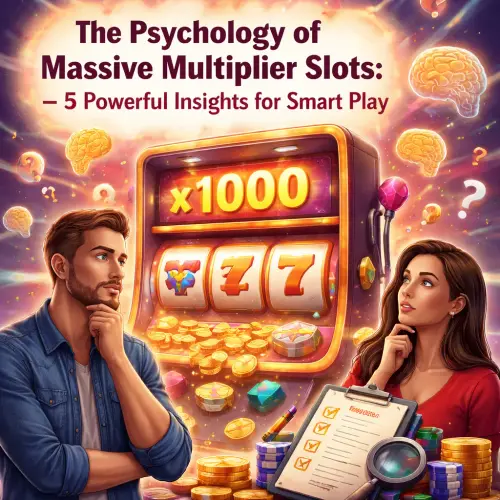
Why the Psychology of Massive Multiplier Slots Matters Today
Modern slot games are no longer simple spin-and-win machines. They are sophisticated psychological tools built to maximize player engagement. From cascading reels to multiplier trails that can reach 10,000x or more, every feature is deliberately engineered. For players, knowing how these designs work is the first step toward playing with a clear head. For a related guide, see 5 Slot Gaming Trends in Singapore: Smart Habits to Avoid.
Game developers study behavioral psychology to keep you spinning longer. They test color schemes, sound frequencies, and reward timing with the same rigor as a social media platform. The result? Games that feel exciting but often obscure the true odds. Understanding the psychology of massive multiplier slots helps you see past the flash and focus on the math.
Variable Rewards in Slots: The Dopamine Loop
The core principle behind most addictive slot designs is the variable reward schedule. This is the same mechanism that makes checking your phone compulsive — you never know when a notification (or a win) will appear.
How Variable Rewards Keep You Playing
When a slot pays out unpredictably, your brain releases more dopamine than it would with a fixed, predictable reward. Massive multiplier slots take this further by tying those unpredictable wins to huge potential payouts. Even a small win with a 50x multiplier feels like a major event, training your brain to chase that feeling again.
Research from the field of gambling psychology shows that variable rewards are one of the most powerful behavioral reinforcers. In a 2018 study published by the Nature journal, participants showed stronger physiological arousal during unpredictable winning intervals compared to predictable ones.
Cognitive Biases and Slot Machine Design
Beyond variable rewards, game designers rely on well-documented cognitive biases. These mental shortcuts make you overestimate your chances and underestimate the house edge.
The Near-Miss Effect
Have you ever spun a slot and landed two jackpot symbols, with the third just one position off? That is a near-miss. Studies show that near-misses activate the same brain regions as actual wins. The psychology of massive multiplier slots uses this by designing reels where near-misses happen more often than pure randomness would allow.
In a 2019 analysis of popular video slots, researchers found that near-misses were deliberately programmed into the visual layout, not just statistical flukes. These events make you feel “close” to a huge multiplier win, encouraging you to spin again.
The Illusion of Control
Buttons that let you stop the reels early, choose your own bet level, or trigger bonus rounds all create an illusion of skill. In reality, the outcome is determined by a random number generator (RNG). Yet players often believe their choices influence the result, especially in games with massive multipliers.
How Massive Multiplier Slots Amplify Risk Perception
When a slot offers a 10,000x potential jackpot, your perception of risk shifts dramatically. The sheer size of the multiplier overrides your rational brain, making a high-volatility game seem more appealing than it should.
Why Bigger Multipliers Feel Better (Even When They Aren’t)
Mathematically, a slot with a 10,000x maximum win might have a lower RTP than a simpler game with a 500x cap. But the massive multiplier captures your attention. This is known as the “availability heuristic” — the big win is easier to imagine, so you overestimate its likelihood.
Game designers know this and often display the maximum multiplier prominently, even if the probability of hitting it is minuscule (sometimes less than 1 in 10 million spins).
5 Powerful Insights for Playing Massive Multiplier Slots Smartly
Knowledge is your best defense. Here are five practical strategies grounded in gambling psychology to help you play without losing perspective.
1. Set a Time and Money Limit Before You Start
Decide exactly how much you are willing to lose and how long you will play. Write it down or set an alarm. The variable reward system is designed to erode your sense of time, so external limits are essential.
2. Understand Volatility and RTP
Massive multiplier slots are almost always high volatility. That means long dry spells punctuated by rare but large wins. Check the game’s RTP (return to player) percentage. An RTP of 96% or higher is standard; anything below means you lose faster on average.
3. Recognize the Near-Miss Trap
When you see two out of three matching symbols, remind yourself: it is no closer to a win than any other spin. The near-miss is a psychological trick, not a signal of impending success.
4. Avoid Chasing Losses
After a losing streak, the temptation to increase your bet to “win it back” is strong. This is fueled by the sunk cost fallacy. Stick to your predetermined budget. The slot does not “owe” you a win.
5. Take Regular Breaks
Slots are designed to create a flow state. Stepping away for 5–10 minutes disrupts the dopamine loop and helps you reassess your choices objectively.
Useful Resources
For a deeper look at the behavioral science behind slot design, visit Psychology Today’s Gambling Addiction section. It covers the neurological effects of random rewards and practical advice for managing play.
If you want to check the RTP and volatility of specific games, AskGamblers’ slot database provides verified information from independent testers.
Frequently Asked Questions About Psychology of Massive Multiplier Slots
What is the psychology of massive multiplier slots ?
The psychology of massive multiplier slots studies how game design elements like variable rewards, near-misses, and cognitive biases influence player behavior and decision-making.
How do variable rewards work in slots?
Variable rewards are unpredictable wins that trigger dopamine release in the brain. This makes the game more engaging and encourages repeated play, even after losses.
What is the near-miss effect in slot machines?
The near-miss effect happens when a spin shows two jackpot symbols and the third just misses, making you feel close to a win even though the odds remain unchanged.
Are massive multiplier slots rigged?
No, licensed slots use RNGs to ensure fair outcomes, but the game design is optimized to maximize engagement through psychological tricks like near-misses and big visual payouts.
Why do multiplier slots feel more addictive than other games?
Massive multiplier slots combine high volatility, large visual win displays, and frequent small wins, creating a powerful dopamine loop that is hard to resist. For a related guide, see Why Volatile Slots Attract High-Risk Players: 5 Key Reasons.
What is the illusion of control in slot machines?
Features like stop buttons or choosing bet sizes make players feel they have skill-based influence, but the RNG determines every result.
How do big multipliers affect risk perception?
Large multipliers make potential jackpots more vivid and easier to imagine, leading players to overestimate their chances of hitting the top prize.
Is there a way to beat massive multiplier slots ?
No strategy can beat a slot’s mathematical house edge, but understanding the psychology helps you set limits and avoid impulsive decisions.
What is the best mindset for playing slots?
The best mindset is viewing slots as entertainment with a cost, not as a way to make money. Set a budget and stick to it.
How do slot designers test player psychology?
Designers use focus groups, eye-tracking studies, and behavioral analytics to measure arousal, dwell time, and spin frequency, then adjust features accordingly.
Do all slots use near-misses?
Not all, but many popular video slots intentionally program near-miss outcomes to increase player engagement, especially in high-volatility games.
What is the role of dopamine in slot play?
Dopamine is a neurotransmitter associated with pleasure and reward. Slots release it during unpredictable wins, reinforcing the behavior of spinning again.
How can I avoid the sunk cost fallacy in slots?
Set a loss limit before starting and stick to it. Remind yourself that past losses do not affect future outcomes — each spin is independent.
Are there different types of variable rewards?
Yes, there are ratio schedules (based on number of spins) and interval schedules (based on time). Slots use variable ratio schedules, which are the most addictive.
What is the gambler’s fallacy in slots?
The gambler’s fallacy is the mistaken belief that after a series of losses, a win is “due”. In reality, each spin is independent with the same probability.
Do music and sound effects influence play?
Absolutely. Winning sounds are designed to be rewarding even for small payouts, while near-miss sounds mimic win audio to create a false sense of success.
How do bonuses and free spins trigger cognitive biases?
Bonuses create a sense of “free money” and reduce the pain of losses, encouraging players to bet larger amounts than they normally would.
What does RTP mean in slot psychology?
RTP (Return to Player) is the theoretical percentage of all wagered money a slot returns over time. High RTP slots still use psychological tricks to keep you playing. For a related guide, see Emotional Control in Slots: 5 Proven Mistakes to Avoid.
Can understanding psychology help me gamble less?
Yes. Awareness of cognitive biases and reward systems gives you mental tools to recognize manipulation and make conscious decisions rather than impulsive ones.
Where can I learn more about gambling psychology ?
Reputable resources include academic journals like the Journal of Gambling Studies, and practical guides from BeGambleAware.

Natalie Yap is a seasoned technical iGaming expert in the Philippine online casino industry, with over 9 years of hands-on experience reviewing and analyzing top casino platforms tailored for Filipino players. She specializes in slot casino games within the Philippine market and is also an experienced technical content writer for YMYL (Your Money or Your Life) websites, where accuracy, trust, and compliance are essential.
In 2026, Natalie is expanding her expertise by actively studying and gaining in-depth knowledge of the Singapore, Malaysia, and Bangladesh iGaming markets, focusing on regional regulations, player behavior, and platform localization.
Responsible Gambling Resources
Responsible Gambling | Gamban | GamBlock | Gambling Therapy | GamCare | GamTalk | GameSense