


payment method exclusions Key Takeaways
Payment method exclusions are restrictions placed on which payment options a customer can use during checkout, often imposed by processors, banks, or merchants themselves.
- payment method exclusions can be triggered by card brand rules, processor policies, or merchant account settings, each requiring a different management approach.
- Common mistakes include ignoring processor-level exclusions, failing to update exclusion lists after processor changes, and not testing excluded methods during checkout.
- Proactive payment exclusion management — using periodic audits, clear documentation, and automated rules — reduces friction and keeps approval rates high.
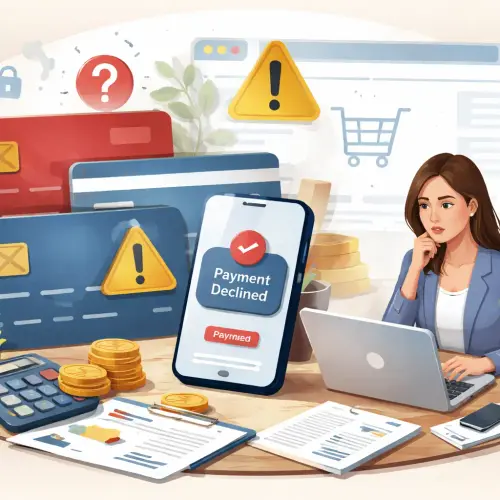
What Are Payment Method Exclusions and Why They Matter
Every time a customer clicks “Buy Now,” the transaction passes through multiple gatekeepers: the payment gateway, the processor, the card network, and the issuing bank. Any one of these parties can block a specific payment type, even if the merchant accepts it in theory. These blocks are called payment method exclusions, and they affect everything from credit card surcharges to digital wallet availability.
For business owners, exclusions aren’t just technical nuisances. A single overlooked exclusion can cause a perfectly valid transaction to fail, leading to abandoned carts and frustrated customers. Worse, some exclusions trigger additional fees or compliance violations if not handled correctly.
Whether you run a Shopify store, a subscription service, or a high-risk merchant account, knowing how to identify and manage exclusions is a core part of payment exclusion management. This guide walks through the seven most common mistakes businesses make and shows you how to exclude payment methods deliberately rather than by accident.
Mistake #1: Confusing Processor Exclusions With Merchant Settings
One of the most frequent errors is assuming that exclusions are always set by the merchant. In reality, many payment processing restrictions come from the processor or acquiring bank. For example, a processor may block all credit card transactions from high-risk countries, or an acquiring bank may refuse to process American Express for certain business categories.
How to Spot Processor-Level Exclusions
Review your merchant services agreement closely. Look for clauses that mention “prohibited payment methods” or “restricted card brands.” Also check the processor’s documentation for country and currency exclusions. If you see a pattern of declines for a specific card type, start here, not with your shopping cart settings.
Document Everything
Create a spreadsheet listing every payment method you intend to accept — credit cards, debit cards, digital wallets, bank transfers, buy now pay later — and note which ones are allowed or blocked at the processor level. This document becomes the single source of truth for your team.
Mistake #2: Overlooking Surcharge and Convenience Fee Exclusions
Many merchants add surcharges to offset processing costs, but card brand rules strictly limit which payment methods can carry a surcharge. Visa and Mastercard, for example, prohibit surcharging on debit cards and prepaid cards in most regions. Similarly, American Express and Discover have their own surcharge policies.
If your system applies a surcharge to an excluded method, you risk chargebacks, fines, or even losing your merchant account. Instead, configure your payment system to exclude surcharges automatically for debit and prepaid products. Use a payment gateway that supports dynamic surcharging based on card type.
Mistake #3: Ignoring Buy Now Pay Later (BNPL) Exclusions
Services like Klarna, Afterpay, and Affirm come with their own set of payment method exclusions. A merchant may think they are “BNPL-ready” but discover that Klarna excludes certain product categories (e.g., digital goods, gambling, firearms).
Common BNPL Restrictions
- Minimum and maximum order values (often $35–$1,500)
- Excluded categories: travel bookings, subscriptions, virtual currencies, adult content
- Geographic exclusions: some providers only serve select countries
Before enabling a BNPL option, check the provider’s merchant policy. Many allow you to set custom exclusions per product category, which you can manage from your payment gateway dashboard.
Mistake #4: Not Updating Exclusions After a Processor or Gateway Change
When you switch payment processors or upgrade your gateway, the exclusion rules often reset to default settings. If you don’t manually reconfigure them, you might accidentally block a payment method you intended to accept — or worse, accept one that should be excluded under your contract.
Always include an “Exclusion Audit” step in your migration checklist. Compare the old processor’s exclusion list with the new one, and test each payment method with a real transaction (use a small test amount). Update your documentation after every change.
Mistake #5: Relying Only on Shopping Cart Software Settings
Platforms like WooCommerce, BigCommerce, and Shopify make it easy to enable or disable payment methods with a checkbox. But these settings only control what appears on the front end. They do not override processor-level exclusions. A customer may select a payment method that your cart allows, only to see a decline at the final step.
| Layer | Controls Exclusions | Common Mistake |
|---|---|---|
| Cart/Checkout UI | Yes (visibility only) | Assuming this is the only layer |
| Payment Gateway | Yes (rules engine) | Not syncing with processor rules |
| Processor/Acquirer | Yes (hard blocks) | Not reviewing the contract |
| Card Network | Yes (brand rules) | Ignoring surcharge compliance |
To avoid this mistake, configure exclusions at the gateway level whenever possible. Gateways like Stripe or Braintree allow you to set rules based on card BIN, country, currency, and amount — giving you a single point of management.
Mistake #6: Forgetting to Test Excluded Payment Methods
Even after you’ve configured exclusions, you need to test them. Use test credit card numbers provided by your gateway to simulate different scenarios: a Visa debit card, a prepaid Mastercard, an American Express corporate card. Verify that the system either hides the option or gracefully displays an explanation when a method is excluded.
A poorly handled exclusion (like a generic error message) can frustrate customers. Instead, show a clear message: “This payment method is not available for this purchase. Please use a different card or payment option.” Test these messages on mobile and desktop views.
Mistake #7: Not Planning for Recurring Payment Exclusions
Subscription businesses face a unique challenge: a payment method may be valid at signup but become excluded later due to expired card rules, processor policy updates, or account freezes. If your system doesn’t monitor exclusions on recurring billing days, you’ll see a spike in failed renewals.
Build a retry logic that checks for exclusion reasons. For example, if a card is declined due to a processor-level exclusion (not just insufficient funds), your system should automatically try an alternative payment method on file or send a dunning email explaining the issue.
How to Build a Payment Exclusion Management Workflow
Effective payment exclusion management isn’t a one-time task. It requires a repeatable process. Here’s a simple workflow you can implement:
- Inventory your payment methods — List every method you accept or plan to accept, including digital wallets, BNPL, crypto, and ACH.
- Map exclusions per layer — Document what’s blocked at the processor, gateway, and cart level.
- Configure exclusions in the gateway — Use the gateway’s rules engine to apply consistent logic.
- Test all scenarios — Run test transactions for each method and exclusion rule.
- Monitor decline codes — Use your processor’s reporting to spot new exclusion patterns.
- Review quarterly — Set a recurring calendar reminder to revisit exclusions after any processor update or contract change.
Useful Resources
For more detailed guidance on payment routing and exclusion rules, check out the Stripe documentation on currency and payment method support. It includes a complete table of exclusions by country and payment type.
If you are navigating high-risk merchant account exclusions, the CardinalCommerce insight hub on payment routing best practices offers real-world case studies and compliance checklists.
Conclusion: Own Your Payment Method Exclusions Before They Own You
Payment method exclusions are a hidden friction point in the checkout flow. Ignoring them leads to lost revenue, compliance headaches, and unhappy customers. But with the right workflow — documenting exclusions per layer, testing regularly, and staying updated on processor and card network changes — you can turn exclusions into a strategic advantage.
Start with a simple audit today: review your processor agreement, check your gateway settings, and run a test transaction for each method you accept. A few hours of preventive work can save you months of chargeback disputes and revenue leakage.
Frequently Asked Questions About payment method exclusions
What is a payment method exclusion exactly?
A payment method exclusion is a restriction that blocks a specific payment type (e.g., Visa debit, PayPal, American Express) from being used for a transaction, either at the merchant, processor, or network level.
Who decides which payment methods are excluded?
Exclusions can be set by the merchant (through their shopping cart or gateway), by the payment processor (based on risk policies), by the card network (e.g., surcharge rules), or by the acquiring bank (based on business category).
How can I check if a payment method is excluded for my business?
Review your processor’s documentation, run test transactions for each method, and examine decline reason codes from your gateway. For card-specific exclusions, check the card brand’s merchant rules.
Can payment method exclusions change over time?
Yes. Processors update their policies, card brands introduce new rules, and your merchant account risk profile can shift. This is why quarterly audits of exclusions are recommended.
Do exclusions apply to all payment types equally?
No. Credit cards and debit cards often have different surcharge rules. Digital wallets like Google Pay may be excluded in certain currencies while cards are not. BNPL providers have their own category restrictions.
What happens if I accept an excluded payment method by mistake?
The transaction may be declined in real time, or the funds could be held and later reversed. In some cases, you could incur fines or lose your merchant account if the exclusion is based on compliance violations.
How are payment method exclusions different from payment method restrictions?
They are often used interchangeably, but a restriction can be a broader policy (e.g., no credit cards over $10,000), while an exclusion is a specific block on a particular method or card type.
Can I exclude a payment method for only certain products?
Yes, many gateways allow you to set rules per SKU, category, or price range. For example, you can exclude Klarna for oversized items or exclude international credit cards for digital downloads.
Do PayPal and Venmo have their own exclusions?
Yes. PayPal may exclude certain merchant categories (e.g., gambling, adult content) and also has country-specific restrictions. Venmo is only available in the US and cannot be used for business transactions unless approved.
What are common exclusions for credit card surcharges?
Visa and Mastercard prohibit surcharges on debit and prepaid cards. Also, 10 US states (e.g., Connecticut, Maine) prohibit surcharging altogether for credit cards. Excluding these correctly is essential.
Do payment processors share exclusion rules publicly?
Most publish a list of supported payment methods per country. However, custom exclusions for high-risk categories or specific accounts are usually documented only in your merchant agreement.
How do recurring billing and exclusions interact?
A payment method that was valid at subscription start may later become excluded (e.g., if the card’s BIN gets flagged or the processor updates its rules). Your billing system should monitor decline codes to detect this.
Can I set exclusions per customer group?
Some gateways and ERP systems allow you to assign different payment method lists to wholesale, retail, or B2B customer groups. This is common in wholesale operations that exclude credit cards for large invoices.
What is the difference between a decline and an exclusion?
A decline happens when a transaction fails validation (e.g., insufficient funds). An exclusion prevents the transaction from even being attempted, often before any authorization request is sent.
Do excluded payment methods show up on the checkout page?
If you configure exclusions at the gateway or cart level, you can hide them or display them with a “not available” label. The best practice is to hide them to avoid customer confusion.
How do I test exclusions before going live?
Use your gateway’s test mode and test card numbers. Simulate different card brands, BINs, currencies, and amounts. Confirm that excluded methods are either hidden or show a clear error message.
Can I add a custom exclusion for a specific card BIN?
Some advanced gateways (like Stripe, Braintree, or Adyen) allow you to block transactions by card BIN or BIN range. This is useful for declining corporate cards or prepaid cards from certain issuers.
Do European businesses have to follow different exclusion rules?
Yes. Under PSD2, certain payment methods (like SEPA direct debit) have mandatory exclusion rules for specific transaction types. Also, surcharging is banned for most consumer cards in the EU.
What should I do if a customer’s payment method is incorrectly excluded?
First, check your exclusion logs in the gateway. Then manually review the customer’s card type, BIN, and transaction amount. If it’s a false exclusion, remove the rule and offer the customer a retry or alternative method.
Is there a standard list of global payment method exclusions ?
No single list exists because exclusions depend on processor, region, and business category. Mastercard, Visa, and Amex each publish brand rules, and processors like Stripe maintain country-specific support docs.

Natalie Yap is a seasoned technical iGaming expert in the Philippine online casino industry, with over 9 years of hands-on experience reviewing and analyzing top casino platforms tailored for Filipino players. She specializes in slot casino games within the Philippine market and is also an experienced technical content writer for YMYL (Your Money or Your Life) websites, where accuracy, trust, and compliance are essential.
In 2026, Natalie is expanding her expertise by actively studying and gaining in-depth knowledge of the Singapore, Malaysia, and Bangladesh iGaming markets, focusing on regional regulations, player behavior, and platform localization.
Responsible Gambling Resources
Responsible Gambling | Gamban | GamBlock | Gambling Therapy | GamCare | GamTalk | GameSense