

safe gambling budget Key Takeaways
A safe gambling budget is your most powerful tool for enjoying gaming without financial regret.
- A safe gambling budget should be based on disposable income, never on rent, bills, or savings.
- Use the “50/30/20” rule to identify how much you can safely allocate to entertainment like gambling.
- Tracking tools and time limits help you stick to your responsible gambling limits without emotional decisions.
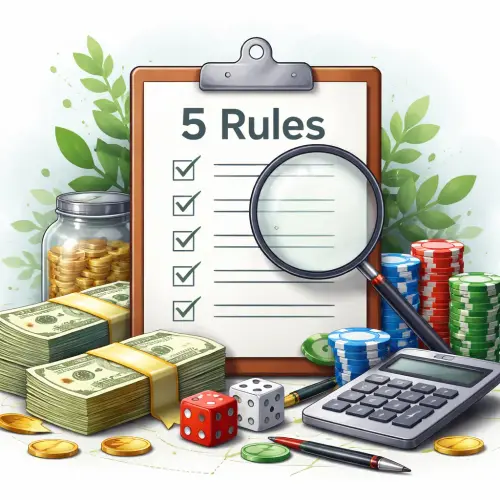
Why a Safe Gambling Budget Is Non-Negotiable
Setting a safe gambling budget isn’t about restricting fun — it’s about protecting your finances, relationships, and mental health. Without a budget, it’s easy to chase losses or spend more than you intended. A clear plan keeps gambling as a recreational activity rather than a financial problem.
According to the National Council on Problem Gambling, about 2 million U.S. adults meet the criteria for severe gambling problems, and another 4 to 6 million experience mild to moderate issues. A safe gambling budget is one of the simplest ways to prevent yourself from becoming a statistic. For a related guide, see 5 Safe Gambling Organizations Every Player Should Know.
How to Calculate Your Safe Gambling Budget in 5 Steps
Building a safe gambling budget takes just a few minutes of honest self-assessment. Follow these steps to set limits that work for your lifestyle.
Step 1: Assess Your Disposable Income
Start by listing your monthly income after taxes. Subtract all essential expenses: rent or mortgage, utilities, groceries, insurance, debt payments, and transportation. What remains is your discretionary income. Your safe gambling budget should come only from this pool — never from essential funds.
A common mistake is to budget a fixed dollar amount without considering other entertainment costs. Gambling should share the same pot as dining out, movies, and hobbies. If you allocate $200 per month for entertainment, gambling might take up $50 of that.
Step 2: Apply the 50/30/20 Principle
The popular 50/30/20 budgeting framework recommends spending 50% of after-tax income on needs, 30% on wants, and 20% on savings. Your safe gambling budget sits within the “wants” category. If your total wants budget is $600 per month, gambling should not consume more than a reasonable portion — typically 10–20% of wants, or about $60–$120.
Using this method gives you a clear, percentage-based ceiling rather than guessing an arbitrary number.
Step 3: Set Separate Bankrolls for Each Session
Divide your monthly safe gambling budget into smaller session limits. For example, if your monthly budget is $100 and you plan to gamble four times, each session has a hard cap of $25. This prevents a single bad night from wiping out your entire month’s budget.
Never reload your bankroll during a session. If the $25 is gone, stop playing. This discipline is one of the most effective gambling budget tips you can follow.
Step 4: Use Tracking Tools
Track every deposit, bet, win, and loss. Free tools like a simple spreadsheet, budgeting apps (Mint, YNAB), or gambling-specific trackers (Gamban, GamStop’s budget feature) help you stay accountable. Set a weekly or monthly reminder to review your spending against your safe gambling budget.
Tracking also reveals patterns — you might discover you bet more on weekends or after stressful days. Once you see the data, you can adjust your limits accordingly.
Step 5: Set Time Limits Alongside Money Limits
Money and time go hand in hand. Use your casino account’s built-in timeout features to limit session duration. Many regulated online casinos let you set daily, weekly, or monthly deposit caps. Combine a 30-minute timer with your $25 bankroll to enforce both responsible gambling limits.
If your platform doesn’t offer time alerts, set an alarm on your phone. When the alarm rings, log out — regardless of whether you’re winning or losing.
Common Mistakes That Sabotage Your Gambling Budget
Even with a plan, certain mistakes can derail your safe gambling budget. Watch for these red flags.
Chasing Losses
Loss chasing is the fastest way to blow your budget. You lose $50 and decide to deposit another $100 to “win it back.” This emotional reaction often leads to larger losses. Stick to your pre-set limits, and accept that losing sessions are part of the game.
Using Credit Cards or Loans
Never fund your safe gambling budget with borrowed money. Credit cards, payday loans, or even borrowing from friends bypass your budget and create debt. Use only cash or a pre-funded e-wallet that holds exactly your allocated amount.
Ignoring Small Wins
When you win early, it’s tempting to treat those winnings as “free money” and bet them aggressively. Smart gamblers withdrawal a portion of wins (e.g., 50%) and keep playing with the rest. This locks in profit while respecting your responsible gambling limits.
Concluding Checklist: Your Monthly Safe Gambling Budget Review
Use this short checklist at the start of each month to keep your safe gambling budget on track:
- ✅ Calculated disposable income and set a gambling allocation within 10–20% of wants
- ✅ Divided monthly budget into session-specific bankrolls
- ✅ Set deposit caps and time limits on your gambling accounts
- ✅ Chosen a tracking app or spreadsheet to log every session
- ✅ Reviewed last month’s spending against budget and adjusted as needed
Warning Signs You Need to Reassess Your Gambling Budget
If you notice any of these signs, it’s time to tighten or pause your safe gambling budget:
- You regularly exceed your session limits.
- You think about gambling when you’re stressed or bored.
- You hide your gambling spending from your partner or family.
- You borrow money to gamble or pay gambling debts.
- You feel anxious or guilty after a gambling session.
If you recognize several warning signs, consider self-exclusion tools or contact a support service like the National Problem Gambling Helpline (1-800-522-4700). For a related guide, see 7 Essential Resources for Responsible Gambling in Singapore.
Useful Resources
- National Council on Problem Gambling Helpline — Free, confidential support 24/7.
- GambleAware — Responsible Gambling Tools — Budget calculators, self-assessment tests, and deposit limit guides.
Frequently Asked Questions About safe gambling budget
What is a safe gambling budget ?
A safe gambling budget is a pre-planned amount of money you can afford to lose — set before you start playing — that comes only from disposable income, not essential funds.
How much should my safe gambling budget be?
Your budget should be no more than 10–20% of your monthly “wants” category under the 50/30/20 rule. For most people, that’s $50–$150 per month.
Can I include gambling winnings in my budget?
No. Winnings are unpredictable and should not be factored into your budget. Treat them as a bonus, not income. Withdraw a portion of winnings to lock in profit.
What are the best gambling budget tips for beginners?
Start small, use cash or a prepaid card, set session limits, and never chase losses. Track every transaction with a simple app or notebook.
How do I track my gambling spending?
Use budgeting apps like Mint or YNAB, or a simple spreadsheet. Many online casinos also offer transaction history and spending reports.
What are responsible gambling limits ?
Responsible gambling limits are self-imposed caps on time and money spent gambling. They include deposit limits, loss limits, session time limits, and wagering limits.
Should I use a separate bank account for gambling?
Yes. A dedicated account or e-wallet with only your budgeted amount prevents overspending and makes tracking easier.
How do I set deposit limits at online casinos?
Log into your account, go to the responsible gambling or account settings section, and choose daily, weekly, or monthly deposit cap. Most regulated sites require this option.
What is the 50/30/20 rule for gambling?
It’s a general budgeting principle: 50% of income on needs, 30% on wants, 20% on savings. Your gambling budget fits within the 30% wants category.
Can I change my safe gambling budget after setting it?
Yes, you can adjust it monthly based on changes in income or expenses. But never increase it mid-session or when emotionally upset.
What if I exceed my gambling budget?
Stop playing immediately. Review what caused the overspend and tighten your limits. If it happens repeatedly, consider a temporary self-exclusion.
How do I talk to my partner about my gambling budget?
Be honest and transparent. Explain that you’ve set a safe gambling budget to keep gambling fun and prevent harm. Share your tracking tool with them if possible.
Are gambling budget apps effective?
Yes. Apps like YNAB, Mint, or dedicated gambling trackers help you visualize spending patterns and stay accountable.
What is loss chasing?
Loss chasing is the urge to keep betting after a loss to try to recover the money. It often leads to bigger losses and is a sign to stop or take a break.
Should I set a time limit as well as a money limit?
Absolutely. Time and money are linked. A 30-minute limit with your budget prevents marathon sessions that erode discipline.
What are the warning signs of problem gambling?
Exceeding budgets, borrowing money to gamble, hiding spending, feeling anxious after playing, and thinking about gambling constantly are all warning signs.
Can I still have fun with a gambling budget?
Yes. A budget removes financial stress so you can focus on the entertainment value. Many players find they enjoy the game more when they aren’t worried about money.
What is the difference between a gambling budget and a bankroll?
A budget is your overall monthly or periodic spending plan. A bankroll is the specific amount you set aside for a single session or game type.
How do I know if my budget is too high?
If you ever feel guilty, anxious, or pressured to gamble, your budget is too high. Reduce it by 25–50% and reassess after two months.
What should I do if I can’t stick to my gambling budget?
Use self-exclusion tools, block gambling sites with software like Gamban, and speak to a counselor. Prioritize your well-being over gambling.

Natalie Yap is a seasoned technical iGaming expert in the Philippine online casino industry, with over 9 years of hands-on experience reviewing and analyzing top casino platforms tailored for Filipino players. She specializes in slot casino games within the Philippine market and is also an experienced technical content writer for YMYL (Your Money or Your Life) websites, where accuracy, trust, and compliance are essential.
In 2026, Natalie is expanding her expertise by actively studying and gaining in-depth knowledge of the Singapore, Malaysia, and Bangladesh iGaming markets, focusing on regional regulations, player behavior, and platform localization.
Responsible Gambling Resources
Responsible Gambling | Gamban | GamBlock | Gambling Therapy | GamCare | GamTalk | GameSense