


volatility and ruin probability Key Takeaways
Understanding volatility and ruin probability is essential for anyone managing investment portfolios, trading strategies, or betting systems.
- High volatility and ruin probability are closely linked; larger price swings can trigger irreversible losses.
- The Kelly criterion offers a mathematical approach to sizing bets or investments to minimize ruin risk while maximizing long-term growth.
- Smart position sizing, diversification, and dynamic risk management are proven strategies to reduce portfolio ruin risk .
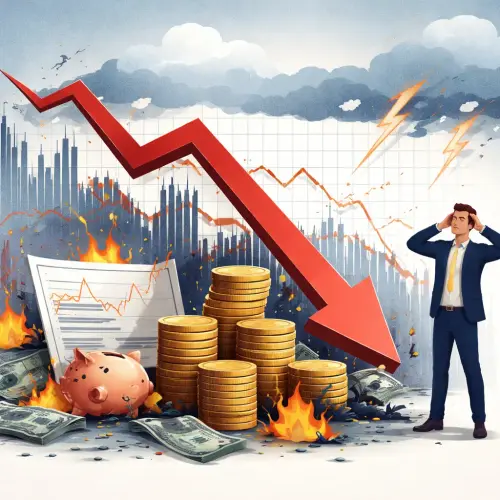
What Readers Should Know About Volatility and Ruin Probability
When you hear the term volatility and ruin probability, it can sound like abstract financial jargon. But in reality, these concepts affect your daily decisions—whether you are investing for retirement, trading stocks, or even managing a business budget. Volatility is the statistical measure of price dispersion over time. If a stock moves up and down by 5% daily, it has higher volatility than one that moves 0.5% daily. Ruin probability, on the other hand, is the likelihood that your capital falls to zero or below a critical threshold before you can recover.
The relationship between these two is intuitive but often underestimated: the more volatile your returns, the more likely a severe drawdown will wipe you out. This happens because large negative returns compound faster than you can compensate with positive returns. For example, a 50% loss requires a 100% gain just to break even—a brutal mathematical reality.
Why Volatility and Ruin Probability Matter for Your Portfolio
Many investors focus exclusively on average returns, ignoring the path those returns take. Here is why volatility and ruin probability deserve your attention.
The compounding trap
A portfolio that loses 30% in one year and gains 20% the next does not average out to a 5% annual return. The actual compound annual growth rate is negative because the loss year impacts the smaller base. High volatility increases the chance of such sequences, raising ruin probability even if arithmetic mean returns are attractive.
Behavioral risk
When volatility spikes, investors often panic-sell at the worst possible time, locking in losses. This behavior converts temporary market volatility into permanent ruin probability. Understanding this relationship helps you build a strategy that keeps you calm during drawdowns.
The Mathematical Link Between Volatility and Ruin Probability
Finance professionals use several models to quantify volatility and ruin probability. The most famous is the Kelly criterion, developed by John Kelly in 1956. It tells you what fraction of your capital to risk on each bet or trade to maximize long-term growth while avoiding ruin.
Kelly criterion: A practical example
Imagine you have a strategy that wins 60% of the time with a 1:1 payoff. The Kelly formula suggests betting 20% of your bankroll. Betting more increases your expected growth but also your ruin probability. Betting less reduces both. This framework shows that even a profitable system can lead to near-certain ruin if you overbet.
| Bet size (% of bankroll) | Expected growth rate | Ruin probability after 100 trades |
|---|---|---|
| 10% | 2.3% per trade | 0.1% |
| 20% (Kelly optimal) | 4.1% per trade | 2.5% |
| 30% | 3.8% per trade | 18% |
| 50% | -1.2% per trade | 68% |
As the table shows, volatility and ruin probability increase exponentially once you exceed the Kelly-optimal bet size.
Real-World Examples of Volatility and Ruin Probability in Action
Let’s look at two scenarios to see how volatility and ruin probability play out.
Investment portfolio: The case of a 60/40 stock-bond mix
A classic 60% stock, 40% bond portfolio has moderate volatility (about 10% annual standard deviation). The historical ruin probability over 30 years is very low if you rebalance and avoid withdrawing during downturns. But if you replace bonds with volatile tech stocks, volatility jumps to 20% or more. That doubles the chance of a 50% drawdown, which for a retiree could mean actual ruin because withdrawals during drawdowns deplete capital faster. For a related guide, see 5 Proven Mistakes to Avoid in Tournaments and Leaderboards.
Betting strategy: The martingale fallacy
The Martingale system doubles your bet after every loss, betting on an eventual win. It seems low-risk day-to-day, but volatility and ruin probability are dangerously high. A losing streak of six consecutive losses can wipe out your entire bankroll if you start with even a small bet. The system fails because it ignores the exponential growth of required capital. For a related guide, see Daily Cashback Casino Singapore: 5 Smart Ways to Maximize.
7 Proven Strategies to Reduce Volatility and Ruin Probability
Now that you understand the dynamics, here are actionable steps to protect your capital.
1. Use the Kelly criterion for position sizing
Calculate the optimal bet size for your strategy. Even if you use a fraction of Kelly (say half-Kelly), you dramatically lower ruin probability while sacrificing only a small amount of growth.
2. Diversify across uncorrelated assets
When one asset crashes, others may hold steady or rise. This reduces portfolio volatility and therefore ruin probability. Avoid overconcentration in a single sector, geography, or asset class.
3. Set a maximum drawdown stop-loss
Decide in advance the total loss you are willing to accept (e.g., 20% of your account). If that level is breached, stop trading and reassess. This hard cap limits ruin probability.
4. Rebalance regularly
Rebalancing forces you to sell high and buy low, smoothing out volatility over time. This reduces the chance that a single extreme move devastates your portfolio.
5. Avoid leverage and margin
Borrowed money amplifies both gains and losses. Even a slight increase in volatility can trigger margin calls, converting temporary losses into permanent ruin. Use leverage only when you have a precise risk management plan.
6. Incorporate fat-tail risk models
Traditional models assume a normal distribution, but real markets have fat tails—extreme events happen more often than expected. Stress-test your portfolio with historical crashes (2008, 2020) to see how volatility and ruin probability behave in worst-case scenarios.
7. Keep a cash reserve
Having 10–20% of your capital in cash or cash-equivalents reduces overall portfolio volatility and gives you flexibility to buy during drawdowns. This buffer directly lowers ruin probability.
Common Mistakes When Managing Volatility and Ruin Probability
Even experienced investors make errors. Here are the most frequent ones.
Ignoring sequence-of-returns risk
Retirees are especially vulnerable. A market crash in the first few years of retirement can force them to sell assets at depressed prices, making ruin probability far higher than it would be later in retirement.
Using average returns instead of compound returns
Always evaluate strategies based on compound annual growth rate (CAGR), not arithmetic mean. The difference is the volatility drag.
Overtrading
Every trade has transaction costs and emotional toll. More trades increase the chance of a catastrophic loss sequence. Focus on high-conviction setups with favorable risk-reward ratios.
Useful Resources
To go deeper, check out these resources:
- Investopedia: Kelly Criterion explained with examples – A clear breakdown of the mathematics and practical applications for investors.
- Corporate Finance Institute: Ruin Probability – Comprehensive guide with formulas and case studies.
Frequently Asked Questions About volatility and ruin probability
What is volatility in simple terms?
Volatility measures how much the price of an asset moves up and down over a specific period. High volatility means big price swings; low volatility means stable prices.
What is ruin probability ?
Ruin probability is the likelihood that your capital falls to zero or below a critical threshold before you can recover. It is a key metric in gambling, trading, and investment risk management.
How are volatility and ruin probability related?
Higher volatility increases the chance of large losses, which in turn raises ruin probability. Even with positive average returns, volatile sequences can wipe out capital.
What is the Kelly criterion ?
The Kelly criterion is a mathematical formula that determines the optimal bet size to maximize long-term growth while minimizing ruin probability. It is widely used in investing and gambling.
Can ruin probability be zero?
Theoretically, ruin probability can be zero if you never risk any capital, but that eliminates growth. In practice, you can make it very small with proper risk management, but never zero.
What is sequence-of-returns risk?
This is the risk that a market downturn early in retirement forces you to sell assets at low prices, increasing the chance of permanent loss and higher ruin probability.
How does diversification affect ruin probability ?
Diversification reduces portfolio volatility by spreading risk across uncorrelated assets. Lower volatility typically leads to lower ruin probability over the long term.
What is a fat-tail distribution?
A fat-tail distribution means extreme events (like market crashes) occur more frequently than predicted by a normal distribution. This makes ruin probability higher than standard models suggest.
Should I use leverage if my strategy is profitable?
Leverage magnifies both gains and losses. Even a profitable strategy can have high ruin probability if you use too much leverage. Use it sparingly and with strict risk controls.
What is the difference between volatility and risk?
Volatility is a measure of price fluctuations; risk includes the potential for permanent loss. Ruin probability is a better measure of risk than volatility alone.
How do I calculate ruin probability for my portfolio?
You can use Monte Carlo simulations or analytical formulas based on your expected returns, volatility, and withdrawal rate. Many financial software tools include this functionality.
What is the best position size to avoid ruin?
The Kelly criterion provides the mathematically optimal size. Many professionals use half-Kelly (half of the optimal) to further reduce ruin probability while still enjoying good growth.
Can volatility be good for investors?
Volatility creates opportunities to buy low and sell high, but it also increases ruin probability if you are overleveraged or forced to sell during downturns. It is a double-edged sword.
What is the relationship between standard deviation and ruin probability ?
Standard deviation is a common measure of volatility. Higher standard deviation means larger price swings, which generally increase ruin probability, especially when combined with high drawdowns.
How often should I rebalance my portfolio?
Rebalancing quarterly or annually is common. More frequent rebalancing can reduce volatility but may increase transaction costs. The key is to maintain your target risk level.
What is a maximum drawdown stop-loss?
A predetermined loss limit (e.g., 20%) that, if reached, triggers a halt in trading or investing activity. This prevents emotional decisions and caps ruin probability.
Does cash reduce ruin probability ?
Yes. Holding a cash reserve lowers overall portfolio volatility and provides a buffer during drawdowns, reducing the chance that you must sell assets at a loss.
What is the gambler’s ruin problem?
A classic probability problem that calculates the likelihood of a gambler going broke given a finite bankroll and unfavorable odds. It directly illustrates the link between volatility and ruin probability.
How do transaction costs affect ruin probability ?
Higher transaction costs reduce net returns and increase the sequence of losses. Over many trades, even small costs can significantly raise ruin probability.
Is ruin probability the same as bankruptcy risk?
In personal finance and trading, yes. Ruin probability means your account balance hits zero. In corporate finance, bankruptcy risk includes legal and operational factors beyond just capital levels.

Natalie Yap is a seasoned technical iGaming expert in the Philippine online casino industry, with over 9 years of hands-on experience reviewing and analyzing top casino platforms tailored for Filipino players. She specializes in slot casino games within the Philippine market and is also an experienced technical content writer for YMYL (Your Money or Your Life) websites, where accuracy, trust, and compliance are essential.
In 2026, Natalie is expanding her expertise by actively studying and gaining in-depth knowledge of the Singapore, Malaysia, and Bangladesh iGaming markets, focusing on regional regulations, player behavior, and platform localization.
Responsible Gambling Resources
Responsible Gambling | Gamban | GamBlock | Gambling Therapy | GamCare | GamTalk | GameSense